 |

Patriot Resource Index
 September 11, 2001 Index
 Federal Response
Listings By Date:
September 16, 2001
9/16/01 Timeline
Federal: Sept 14-16 '01
White House: Sept '01
September 11, 2001 Index
 Background
International Response
Presidential Response
Timelines
Links & Other Resources
Search the Site
Site Map
Contact Us
PatriotResource.com:
Main Index
Film Index
Film: Gladiator
Film: National Treasure
Film: The Patriot
Film: Tombstone
Films: General
Films: Fantasy
Films: SciFi
History: 1775-1781
History: September 11th
Lord of the Rings
NORAM Road Trips
OtherWorld: Index
TV Series: Index
TV: Battlestar Galactica
TV: Caprica
TV: Deadliest Catch
TV: Lost
TV Series: Action
TV Series: Animated
TV: BBC Presentations
TV Series: Comedy
TV Series: Drama
TV: Fantasy/SciFi
TV Series: Western
TV Series: Reviews
September 11, 2001 IndexFederal ResponseListings By Date:
September 16, 2001
9/16/01 Timeline
Federal: Sept 14-16 '01
White House: Sept '01
September 11, 2001 IndexBackgroundInternational ResponsePresidential ResponseTimelinesLinks & Other ResourcesSite Map
Contact Us
Main Index
Film Index
Film: Gladiator
Film: National Treasure
Film: The Patriot
Film: Tombstone
Films: General
Films: Fantasy
Films: SciFi
History: 1775-1781
History: September 11th
Lord of the Rings
NORAM Road Trips
OtherWorld: Index
TV Series: Index
TV: Battlestar Galactica
TV: Caprica
TV: Deadliest Catch
TV: Lost
TV Series: Action
TV Series: Animated
TV: BBC Presentations
TV Series: Comedy
TV Series: Drama
TV: Fantasy/SciFi
TV Series: Western
TV Series: Reviews
Vice President Dick Cheney
Interview with Tim Russert on NBC Meet the Press
Camp David
Thurmont, Maryland
September 16, 2001
Con't
MR. RUSSERT: This is Flight 77, which had left Dulles.
VICE PRES. CHENEY: Which turned out to be Flight 77. It left Dulles, flown west towards Ohio, been captured by the terrorists. They turned off the transponder, which led to a later report that a plane had gone down in Ohio, but it really hadn’t. Of course, then they turned back and headed back towards Washington. As best we can tell, they came initially at the White House and...
MR. RUSSERT: The plane actually circled the White House?
VICE PRES. CHENEY: Didn’t circle it, but was headed on a track into it. The Secret Service has an arrangement with the F.A.A. They had open lines after the World Trade Center was...
MR. RUSSERT: Tracking it by radar.
VICE PRES. CHENEY: And when it entered the danger zone and looked like it was headed for the White House was when they grabbed me and evacuated me to the basement. The plane obviously didn’t hit the White House. It turned away and, we think, flew a circle and came back in and then hit the Pentagon. And that’s what the radar track looks like. The result of that — once I got down into the shelter, the first thing I did — there’s a secure phone there. First thing I did was pick up the telephone and call the president again, who was still down in Florida, at that point, and strongly urged him to delay his return.
MR. RUSSERT: You told him to stay away from Washington.
VICE PRES. CHENEY: I said, ‘Delay your return. We don’t know what’s going on here, but it looks like, you know, we’ve been targeted.’
MR. RUSSERT: Why did you make that judgment?
VICE PRES. CHENEY: Well, it goes to — you know, sort of my basic role as vice president is to worry about presidential succession. And my job, above all other things, is to be prepared to take over if something happens to the president. But over the years from my time with President Ford, as secretary of Defense, on the Intel Committee and so forth, I’ve been involved in a number of programs that were aimed at ensuring presidential succession. We did a lot of planning during the Cold War, Tim, with respect to the possibility of a nuclear incident. And one of the key requirements always is to protect the presidency. It’s not about George Bush or Dick Cheney. It’s about the occupant in the office. And one of the things that we did later on that day were tied directly to guaranteeing presidential succession, and that our enemies, whoever they might be, could not decapitate the federal government and leave us leaderless in a moment of crisis. That’s why, for example, when we have a State of the Union speech and we’ve got the entire government assembled — the president, vice president, congressional leaders, Cabinet and so forth — we always leave a Cabinet member out. He’s always taken to a secure location and set up there in case something should happen in the House chambers so we still have a president.
MR. RUSSERT: Did you have any role in Speaker Hastert...
VICE PRES. CHENEY: Yes.
MR. RUSSERT: ...speaker of the House being taken away?
VICE PRES. CHENEY: We evacuated Speaker Hastert to a secure facility, and later, the rest of the congressional leadership. I also ordered the evacuation of Cabinet members. And so we sent Tommy Thompson, Ann Veneman, Gale Norton also up to a secure facility. And in the days since, we’ve always
maintained to say — I’ve spent a good deal of my time up at Camp David since the president returned to the White House just so we weren’t both together in the same place so we could ensure the survival of the government.
The president was on Air Force One. We received a threat to Air Force One — came through the Secret Service...
MR. RUSSERT: A credible threat to Air Force One. You’re convinced of that.
VICE PRES. CHENEY: I’m convinced of that. Now, you know, it may have been phoned in by a crank, but in the midst of what was going on, there was no way to know that. I think it was a credible threat, enough for the Secret Service to bring it to me. Once I left that immediate shelter, after I talked to the president, urged him to stay away for now, well, I went down into what’s call a PEOC, the Presidential Emergency Operations Center, and there, I had Norm Mineta...
MR. RUSSERT: Secretary of Transportation.
VICE PRES. CHENEY: ...secretary of Transportation, access to the FAA. I had Condi Rice with me and several of my key staff people. We had access, secured communications with Air Force One, with the secretary of Defense over in the Pentagon. We had also the secure videoconference that ties together the White House, CIA, State, Justice, Defense — a very useful and valuable facility. We have the counterterrorism task force up on that net. And so I was in a position to be able to see all the stuff coming in, receive reports and then make decisions in terms of acting with it. But when I arrived there within a short order, we had word the Pentagon’s been hit. We had word the State Department had been bombed, that a car bomb had gone off at the State Department. Turned out not to be true, but we didn’t know that at the time. We had a report that Norm had provided that there were six airplanes that might have been hijacked, and that’s what we started working off of, was that list of six.
Now we could account for two of them in New York. The third one we didn’t know what had happened to it. It turned out it had hit the Pentagon. But the first reports on the Pentagon attack suggested a helicopter, and then later, a private jet, and it was only after we got ahold of some eyewitnesses that we knew it was an American Airlines flight. So then we had three planes accounted for, but we still have had three outstanding.
We had reports of planes down in Ohio, turned out not to be true; down in Pennsylvania; turned out that was true. And all of that — excuse me — added with the report of a prospective attack on Air Force One itself, we’d have been absolute fools not to go into button down mode, make sure we had successors evacuated, make sure the president was safe and secure. Offutt was a good location for that purpose, and also the president...
MR. RUSSERT: In Nebraska.
VICE PRES. CHENEY: In Nebraska.
MR. RUSSERT: Are you convinced there were only four hijackings, that there were not other hijacks attempted that we don’t know about?
VICE PRES. CHENEY: I don’t know. We know there were four, of course. I don’t think until we’ve completed our investigation, looked at all the ties and relationships, we’ll be able to say that there were no other plans for additional planes.
MR. RUSSERT: When you made the recommendation to the president, “Stay where you are, go to a secure facility in Nebraska,” were you ever concerned, did it ever enter your thought process that there would be criticism of the president for not coming back to Washington during a crisis?
VICE PRES. CHENEY: I didn’t really think about it. I mean, it was such a clear-cut case, in my estimation, that the most important thing here is to preserve the presidency. We don’t know what’s happening. We know Washington’s under attack. We don’t know by who, we don’t know how many additional planes are coming. We don’t know what all is planned for us, at this point. Within about 35 or 40 minutes, we’d seen this unfolding of this monstrous terrorist attack, and it was absolutely the right decision. I have no qualms about it at all. The president wanted to come back. We talked repeatedly during the course of the day. He made it clear he wanted him back as soon as we thought it made sense. The Secret Service did not want him back. They even talked to me to try to get me to evacuate a couple of times, but I didn’t want to leave the node that we’d established there, in terms of having all of this capability tied together by communications where we could, in fact, make decisions and act. And if I’d have left, gotten on a helicopter and launched out of the White House, all of that would have been broken down. And we had the presidential succession pretty well guaranteed, so I thought it was appropriate for me to stay in the White House.
MR. RUSSERT: Symbolisms are so important to terrorists. The fact that George Bush stayed at the White House, you came to Camp David. Are you concerned that that sends a mixed message to the terrorists that they can disrupt our government, or do you err on the side of caution and safety and keep the two key leaders separated?
VICE PRES. CHENEY: Well, we erred on the side of, I’d say, responsibility. The — when something like this happens, we’ve got certain obligations and responsibilities you’ve got to carry out. And those took priority. They did for the president. They did for me. Also with modern communications — I mean, the president was in touch with me throughout the day. We talked repeatedly. He made some key decisions that were very important to the operation. Once he got to Offutt, he convened a meeting of the National Security Council again using the secure video conference hookup and...
MR. RUSSERT: What’s the most important decision you think he made during the course of the day?
VICE PRES. CHENEY: Well, the — I suppose the toughest decision was this question of whether or not we would intercept incoming commercial aircraft.
MR. RUSSERT: And you decided?
VICE PRES. CHENEY: We decided to do it. We’d, in effect, put a flying combat air patrol up over the city; F-16s with an AWACS, which is an airborne radar system, and tanker support so they could stay up a long time. It doesn’t do any good to put up a combat air patrol if you don’t give them instructions to act, if, in fact, they feel it’s appropriate.
MR. RUSSERT: So if the United States government became aware that a hijacked commercial airline was destined for the White House or the Capitol, we would take the plane down?
VICE PRES. CHENEY: Yes. The president made the decision, on my recommendation as well, wholeheartedly concurred in the decision he made, that if the plane would not divert, if they wouldn’t pay any attention to instructions to move away from the city, as a last resort, our pilots were authorized to take them out. Now, people say, you know, that’s a horrendous decision to make. Well, it is. You’ve got an airplane full of American citizens, civilians, captured by hostages, captured by terrorists, headed and are you going to, in fact, shoot it down, obviously, and kill all those Americans on board? And you have to ask yourself, “If we had had combat air patrol up over New York and we’d had the opportunity to take out the two aircraft that hit the World Trade Center, would we have been justified in doing that?” I think absolutely we would have. Now, it turned out we did not have to execute on that authorization. But there were some — a few moments when we thought we might, when planes were incoming and we didn’t know whether or not they were a problem aircraft until they’d diverted and gone elsewhere and been able to resolve it.
MR. RUSSERT: And that will be the policy of the United States in the future?
VICE PRES. CHENEY: Well, the president will, I’m sure, make a decision, if those circumstances arise again. It’s a presidential-level decision, and the president made, I think, exactly the right call in this case, to say, “I wished we’d had combat air patrol up over New York.”
MR. RUSSERT: More and more, Mr. Vice President, we’re finding out, it appears, that the fourth plane that crashed in Pennsylvania crashed because of some real heroism by Americans. Jeremy Glick had received a — called his wife to say he’d been hijacked. She informed him that two planes had struck the World Trade Center. And he said, “I think we have to do something.”
VICE PRES. CHENEY: It’s true. I think the Washington part of the attack was significantly interfered with. I’m speculating. Some of this is informed speculation; some of it’s based on some evidence. But clearly, we know the plane that crashed outside Pittsburgh was headed for Washington. We know it was part of the scheme. Mr. Glick and others — Mr. Burnett — were very courageous when they made that decision, knowing that they were doomed.
MR. RUSSERT: And you’ve told his wife that, haven’t you?
VICE PRES. CHENEY: I called Mrs. Glick yesterday, as a matter of fact. Haven’t been able to reach Mrs. Burnett yet, but I’m going to call her, too. And I’m sure there were probably others on the aircraft who helped, but what they did was to foil, I think, the attack on Washington. My guess is, speculation, that target probably would have been the Capitol building. It’s big; it’s easy to hit. I think one of the reasons that the White House did not get hit, I think it turned out to be tougher to see than they had anticipated. When you come in from the west, as American 77 did, unless you get up altitude a ways, you can’t see the White House because the Executive Office Building is there.
MR. RUSSERT: And Treasury on the other side.
VICE PRES. CHENEY: Treasury on the other side. And I’m speculating that the lack of ability to be able to acquire it visually may, in fact, have led them to go back.
MR. RUSSERT: Gave it up as a target...
VICE PRES. CHENEY: Yeah.
MR. RUSSERT: ...and went to the Pentagon, which is clearly visible?
VICE PRES. CHENEY: And went to the Pentagon instead. And speculation on my part. We’ll never know for sure. But without question, the attack would have been much worse if it hadn’t been for the courageous acts of those individuals on United 93.
MR. RUSSERT: Two important symbols. Should the World Trade Center be rebuilt?
VICE PRES. CHENEY: I think we clearly want to redevelop that area. Exactly what it ought to — what it ought to look like and what will go in there, those are decisions that are going to have to be made by New York officials. But the president’s very interested in supporting those efforts, and I’m absolutely convinced that that’s the right thing to do. We don’t let terrorists prevail in this day and age.
MR. RUSSERT: Should Ronald Reagan National Airport be re-opened?
VICE PRES. CHENEY: We’ve got to find ways to deal with that problem. It’s been controversial from time to time over the years. But, of course, we’ve always kept Ronald Reagan open because of its location. It’s very convenient for people living in Washington. The problem we have is, of course, that on the approach or takeoff from Reagan, you fly right up the Potomac and you’re within seconds or a minute or two of being able to hit the White House, the Congress, important facilities in Washington. And finding the way to deal with those circumstances is going to have to precede, I think, a re-opening of the airport.
MR. RUSSERT: So it may be closed for some time.
VICE PRES. CHENEY: We don’t know yet. I mean, Norm Mineta is working aggressively on this and — but we did — especially this week, we wanted to be supercautious. As long as there was the possibility there might be other teams out there that, in fact, planned the same kind of operation that the terrorists undertook on Tuesday. We thought it was prudent to keep it closed for now.
MR. RUSSERT: Mr. Vice President, we have to take a quick break. We’ll be right back with more of our discussion with Vice President Dick Cheney. We’re at Greentop in the shadows of Camp David. Be right back.
(Announcements)
MR. RUSSERT: A lot more questions for the vice president of the United States, Dick Cheney, right after this.
(Announcements)
MR. RUSSERT: And we are back talking to Vice President Dick Cheney. He’s been here at Camp David speaking with the president and the national security team for the last 36 hours at least. Mr. Vice President, a lot of discussion as to our preparedness. The first hijacking was confirmed at 8:20, the Pentagon was struck at 9:40, and yet, it seems we were not able to scramble fighter jets in time to protect the Pentagon and perhaps even more than that. There have been at least five serious reports on domestic terrorism, how to cope with it, one given to you in May, Cheney to Lead Anti-Terrorism Plan. Were we ready for this?
VICE PRES. CHENEY: Were we ready for it? I think the agencies responded very well once it happened. I think the courage and the bravery of the men and women of New York, for example, the first responders, if you will, fire and rescue teams, many of whom gave their lives when the towers collapsed, was superb. I don’t think you can take anything away from them. But the problem you have here — I mean, if you think about it from the standpoint of aircraft — do we train our pilots to shoot down commercial airliners filled with American civilians? No. That’s not a mission they’ve ever been given before. Now we’ve got to think about that. With respect to the intelligence area, there’ll be, I’m sure, a lot of sort of Monday morning quarterbacking, second-guessing, if you will, about whether or not there was an intelligence failure. Clearly, we did not learn of this operation or we would have stopped it if we had. But I think it’s important to remember that our men and women in the intelligence business out there all over the world 365 days a year, defending and protecting us, oftentimes very successful, oftentimes in ways we can never talk about, but we clearly need to do everything we can to forestall those kinds of activities by improving our intelligence capabilities, and this offers a lot of lessons learned.
At the same time, the key, though, is to go eliminate the terrorists. We may never have 100 percent perfection in terms of our intelligence capabilities to be able to penetrate and know about all these kinds of operations — Timothy McVeigh, for example, in Oklahoma City. But if we go after the terrorists, if we deny them sanctuary, if we take out their bases and their locations where they operate, that’s probably the most effective way to deal with this threat. But we have to recognize, no matter how good we are, no matter how aggressively we pursue this, we’re likely to be subject to that partly by the very nature of our society. We’re an open society, we love it that way, that’s very important to preserve that, and not to let the terrorists win by turning ourselves into some kind of police state.
MR. RUSSERT: The chairman of the Senate Intelligence Committee said this is a failure of great dimension in terms of intelligence. Will George Tenet remain as director of the CIA?
VICE PRES. CHENEY: I think George clearly should remain as director of the CIA. I think — I’ve had great confidence in him. I’ve watched him operate now and worked closely with him for the last seven or eight months. I think he and his people do superb work for us. And I think it would be a tragedy if somehow we were to go back now in the search for scapegoats and say that George Tenet or any other official ought to be eliminated at this point. I don’t think you can say that.
MR. RUSSERT: When Air Force One returned to Washington, we saw it accompanied by fighter jets.
VICE PRES. CHENEY: Right.
MR. RUSSERT: General Norman Schwarzkopf, a man you know well, has suggested that perhaps in the short term, at least, Air Force One should be accompanied by fighter jets while flying over the United States just as a precaution.
VICE PRES. CHENEY: Perhaps. I don’t know that we’ve made that judgment yet, that decision yet. You know, what happened on Tuesday — of course, once we got all the aircraft grounded, that gave us a fairly high degree of confidence that we were in control. The problem was, there were some 2,000 aircraft up when this operation started, and it took several hours to get them all down. And as long as there were aircraft up and there was a report of a threat against Air Force One, and there were aircraft we couldn’t account for, that might, in fact, have been taken by the terrorists, flying cover for Air Force One was very important.
MR. RUSSERT: Would we consider using fighter jets to protect Air Force One for the short...
VICE PRES. CHENEY: I think if we believe it’s necessary, we absolutely will.
MR. RUSSERT: In Europe, the government provides security at the airports, highly trained, well-paid specialists. Here in the United States, it’s a low-paying job hired by the airlines. Would we consider having the government take over airline security, airport security?
VICE PRES. CHENEY: We’re clearly going to have to look at this whole question and find ways to improve and enhance our security, without a doubt. And it’s going to be a prime focus for Norm Mineta and the folks over at the F.A.A. Exactly what the answer ought to be, Tim, I don’t have enough information now to be able to judge that. But without question, this was a significant failure there in the sense that they were able to take four aircraft. But again, they didn’t do it with guns or explosives; they did it with knives.
MR. RUSSERT: The airline industry is losing $300 million a day, several teetering on bankruptcy or at least Chapter 11. Would you support a federal bailout of both loans and grants and assistance to the airline industry?
VICE PRES. CHENEY: The president hasn’t really taken a position on any particular piece of legislation. And I think we’re very interested in finding ways to make certain that in this particular instance, there is no sort of permanent damage, if you will, to our civil aviation capacity. It’s very important. We’ve got people — Norm Mineta’s working on it. Larry Lindsey, who heads the economic council, is heavily engaged in it. We’re working with the airlines, and I’m sure we’ll come up with some...
MR. RUSSERT: So you’re open to the concept?
VICE PRES. CHENEY: Absolutely.
MR. RUSSERT: About a week ago, we were all discussing the so-called Social Security trust fund and who...
VICE PRES. CHENEY: And the lockbox.
MR. RUSSERT: ...and the lockbox...
VICE PRES. CHENEY: Right.
MR. RUSSERT: ...and who spent the surplus. Is that debate now moot?
VICE PRES. CHENEY: I think so. I certainly hope so. I think, you know, we’ve all been concerned to make certain we protect Social Security. But we clearly have a situation here — and that debate was a little bit fallacious anyway, because, in fact, there was never any question but what the United States government was going to pay its obligations to our seniors. We’ve never defaulted on a debt since Alexander Hamilton was Treasury secretary, so that’s never really been an issue. But clearly, at this stage, we do have a surplus that’s generated primarily by the payroll tax, and as has been true oftentimes in the past, that comes in, we were using it to retire debt. Clearly, some of it now is going to be used to meet this emergency, the urgent supplemental that the Congress passed this weekend of some $40 billion; take those steps we need to take, both to recover from this attack, as well as to do everything we can to prevent future ones.
MR. RUSSERT: The president said he would use the Social Security surplus in case of war and/or recession.
VICE PRES. CHENEY: Right.
MR. RUSSERT: Do we now have both war and recession?
VICE PRES. CHENEY: Quite possibly. We clearly have a war against terrorism and we don’t know yet what the third quarter is going to be like. But if the economists come in and revise the second quarter down into negative territory in terms of Gross Domestic Product growth and the third quarter, fourth quarter-third quarter of the calendar year, fourth quarter of the fiscal year...
MR. RUSSERT: And the economic shock from this.
VICE PRES. CHENEY: Yeah. If that comes in negative, then we’ll have the definition of two negative quarters. That would qualify as a recession.
MR. RUSSERT: What about the debate over missile defense? Many Democrats are saying this now proves that our focus should be on terrorism and counterterrorism and preparedness, and that the primary threat is not something the missile defense could take care of.
VICE PRES. CHENEY: Well, I just fundamentally disagree. I mean, there’s no question but what there’s a threat on the terrorist front, and we’ve got to deal with that. We’ve been work it. We’ll continue to work it. But there are also-this does not, in any way, diminish the threat with respect to ballistic missiles down the road. A ballistic missile equipped with a weapon of mass destruction, a nuke, for example, a nuclear weapon would be far more devastating than what we just went through. If one of those was to hit one of our cities or to hit a major base overseas where US forces are deployed, the casualty list would be higher. The consequences would be even greater than the terrible tragedy we’ve just been through.
MR. RUSSERT: So we can afford this war on terrorism and a missile defense system?
VICE PRES. CHENEY: I don’t see, Tim, how anybody can argue that we cannot afford to defend America, and we’re going to have to defend it against conventional threats. We’re going to have to defend it against ballistic missile threats. We’re going to have to defend it against the threat of terrorism. And I think for public officials to argue because we got hit with a terrorist assault, we should ignore the ballistic missile threat out there strikes me as irresponsible.
MR. RUSSERT: The stock market has been closed since Tuesday. It reopens tomorrow. Are you concerned?
VICE PRES. CHENEY: I think that our economy is strong. I do believe the market’s going to open tomorrow. That’s clearly the current plan and expectation. I would hope — I’m not an investor anymore, because I had to get out of the market since I’m now a public official. But I would hope the American people would, in effect, stick their thumb in the eye of the terrorists and say that they’ve got great confidence in the country, great confidence in our economy, and not let what’s happened here in any way throw off their normal level of economic activity. We look forward to recovery later this year from the slowdown period that we’ve been through, and I have every confidence that that will, in fact, happen.
MR. RUSSERT: Would you ever consider undoing or holding off or triggering part of the tax cut in the future if the resources were necessary?
VICE PRES. CHENEY: No, I think the tax cut’s crucial. And that’s exactly what we needed in terms of the slowdown. Having the tax cut out there now means we’re going to have a more robust year than would have been the case without the tax cut. It’s a key piece of stimulus. And I think the president did exactly the right thing.
MR. RUSSERT: There is such fervor, such emotion, such anger in the country right now. And as we conduct this war against terrorism, as you said, it’s going to take, days, months, years. What do we ask of the American people? Will they have to sacrifice in order to help win this war?
VICE PRES. CHENEY: I guess I would ask vigilance. Be aware of what’s going on around you. Don’t operate on the assumption that somehow because we live behind two oceans we’re immune to attack. We now know we’re not. I would ask, obviously, that they be understanding, if you will, of the importance of the effort that we’re going to have to undertake here. We may end up, you know, with more stringent security measures at airports and things like that. But I think there’s a unity and a spirit out there that I’ve not seen for a long time in this country. And I see it on Capitol Hill between Republicans and Democrats. I see it — the workers who were cleaning up the mess in New York where the president visited yesterday. I see it in the people I’ve talked with. And I think we have to recognize we are the strongest, most powerful nation on Earth. We’ve got a tremendous set of accomplishments and an enormously bright future ahead of us. There are those in the world who hate us and that will do everything they can to impose pain, and we can’t let them win.
MR. RUSSERT: And we’ll find them.
VICE PRES. CHENEY: We’ll find them.
MR. RUSSERT: Mr. Vice President, we thank you for inviting us up to the mountains here with you, and we’ll be watching you very carefully.
VICE PRES. CHENEY: Thanks, Tim.
MR. RUSSERT: Like all of you, I have spent this week wiping my eyes and grinding my teeth and wondering why. I’ve drawn strength from a story about a man I knew, Father Michael Judge. The chaplain of the New York City Fire Department, a Franciscan, he raced to the World Trade Center after the explosion to comfort the injured. While administering the last rites to a dying rescue worker, he, himself, was killed by flying debris.
New York’s bravest physically carried Father Mike away. They brought his body first to the altar of St. Peter’s Church, where it would be safe, then to their firehouse on 31st Street, Hook and Ladder Company Number 24, directly across from the friary where he lived. They wrapped him in sheets and placed him in one of their own bunks. They asked his fellow Franciscans to cross the street and join them. Together —f iremen, priests, and brothers — wept and sang the prayer of St. Francis, “May the Lord bless and keep you and show his face to you and have mercy on you.” That is the way of New York. That is the spirit of America. From February 1945 at Iwo Jima to September 2001 at the World Trade Center.
END
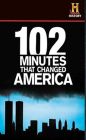
102 Minutes That
Changed America DVD