|
|
|

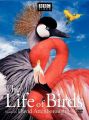
BBC's Life of Birds
Approximately 580 minutes
3 Discs
From BBC Video:
Birds are one of the most successful creatures on earth. Over 9,000 species span the globe, winging their way from the arctic to the Antarctic, from deserts to jungles. The Life of Birds uncovers new research into the behaviour of these perfectly adapted conquerors of the air. In this series, the secrets of birds' great successes comes to light - their remarkable strategies of finding food, their complex social systems, and their ingenious and often bizarre ways of mating and breeding. From high-speed aerial hunters and long-distance migrants to brilliantly coloured nectar-grazers, the comical and the bizarre, this is the definitive series on birds.
The definitive series on the most colorful, popular and perfectly adapted creatures on earth. Covering 42 countries and examining over 300 species and hosted by Sir David Attenborough for this extraordinary look at birds' amazing strategies for finding food, mating and raising their young.
Colorful, mysterious, noble and intriguing, birds have fascinated us since the dawn of history.Sir David Attenborough, one of the world's foremost naturalists, hosts an extraordinary exploration into the secret lives of these magnificent creatures.
Over three years in the making, with stunning slow-motion and computer enhanced special effects, this landmark 10-part series will fascinate every nature lover.
SYNOPSES:
EPISODE 1: TO FLY OR NOT TO FLY - "Birds are the most accomplished aeronauts the world has ever seen and being able to travel by air and fly with such extraordinary precision and control is one of their most characteristic talents. But flapping wings takes a lot of effort,so if there is no need to fly, birds save their energies...they become flightless."
Feathers are the key to birds' success,and 150 million years ago when they evolved from the dinosaurs, birds took to the air. But some have abandoned flight in a bid to take over the Earth as well. To survive, these flightless birds either have to be large enough to defend themselves, such as ostriches and emus,or to live on isolated islands where mammals cannot get at them. From the famous Galapagos Islands, David Attenborough says: "Those that live here have no natural enemies from which to escape, so some birds don't bother to fly - like these flightless cormorants with their stubby, useless wings."
The immense island of New Zealand is paradise for flightless birds.The arrival of humans a mere 1,500 years ago was bad news for the birds, but even so, New Zealand gives us a rare glimpse of what the world would have been like if the birds had won the battle with the early mammals and now ruled the Earth. The kiwi is New Zealand's equivalent of a badger. David Attenborough has a midnight encounter with a kiwi on an isolated beach,and an ultra-sensitive 'starlight'camera reveals the magic moment as the kiwi snuffles its way towards David, seemingly unafraid of his presence. The rarest bird of all is the flightless kakapo - the largest parrot in the world.
EPISODE 2: THE MASTERY OF FLIGHT - "For a bird, getting into the air is not easy. Indeed, for many, it is by far the most exhausting bit of the whole business of flight."
Birds have perfected the art of flying - from high-speed hunting at 200 miles per hour to precision hovering,from short hops to long hauls.A bird's flight seems effortless, but how can birds withstand the pull of gr avity that keeps the rest of us tied so firmly to the ground? On an island in Japan, shearwaters waddle up the sloping trunk of the tree and, with a helping hand from David Attenborough, they get to the top of the tree, jump off into space and glide out to sea. That's the easy way to get airborne, but big birds such as albatrosses have to taxi along a runway of sand, running as fast as their feet will take them. David Attenborough flies like a bird. In a glider with pilot Suzanne Connor, he rides the thermals over the dramatic peaks of the Sawtooth Mountains in Idaho. Back on the ground, a magnificent trained golden eagle alights gracefully on to David Attenborough's arm,allowing him to appreciate fully a bird's lightweight bone structure.
Next,a jet fighter rips low through the sky over his head with its wings folded back to achieve complete aerodynamic efficiency. Peregrine falcons can reach speeds of over 200 miles per hour using the same technique. David Attenborough is surrounded by a whirring hum of tiny colourful birds: "There's only one group of birds that can hover for any length of time without the help of a head-wind - hummingbirds." The ability to fly gives birds the freedom of the planet, so that when the food runs out for them in the northern hemisphere in late autumn, they can fly South relatively easily and quickly to find more. But to take on these long journeys, they must stock up on food in vast quantities. Sandpipers even shrink their own guts and brains to take on more fat deposits for the flight - they will need more brawn than brain. One tiny hummingbird holds the world record for fast flights. It cracks the 500-mile non-stop sea crossing over the Gulf of Mexico in just over a day.
EPISODE 3: THE INSATIABLE APPETITE - "To fly, birds need plenty of food. If they had heavy, bony jaws and teeth they would never get off the ground, so the solution is to have a beak.And this strong, lightweight structure is one of the reasons why birds are so successful."
Beaks come in all shapes and sizes to suit the job in hand, from tweezers and nutcrackers, to drills. Crossbills force apart the toughest pine cones to prise out the seeds, and great spotted woodpeckers drill through solid wood to fish out beetle larvae.Woodpeckers can store as many as 60,000 acorns in a larder of holes drilled in the trunk of a tree. There are hawfinches that crack cherry seeds,and a hummingbird with a beak longer than its body for sucking up nectar. Sapsuckers in North America cut wells in tree bark to keep the sap flowing, in the same way that humans tap rubber. The stars of the show are the tool-users.
In the Galapagos Islands, woodpecker finches winkle grubs out of dead wood using cactus spines. Filmed for the first time, crows in New Caledonia carry their favourite sticks around with them to catch giant wood-boring grubs.The crows have learned that if provoked,the irascible grubs will bite the sticks and not let go, letting the crow just fish them out. Birds will even use other animals as lookout perches or mobile foodstores.Oxpeckers feed on ticks and other pests which they harvest from the hides of giraffes and zebras, but in a sinister twist some have developed a taste for blood and while pretending to help the animal they are actually dining on it: "In spite of having such a specialised life, living on the bodies of mammals, oxpeckers manage to get quite a varied diet, a maggot here, a tick there, a little sip of blood, perhaps a little tasty earwax!"
EPISODE 4: MEAT-EATERS - "Being such a rich food,many birds need only feed on meat once a day to sustain themselves. Nice work if they can get it,but getting it is not necessarily all that easy."
There are parrots in New Zealand called keas that fancy something a little more interesting than the usual fruit and nuts - they eat meat.To hunt, birds need super-senses and great skill. Great grey owls in North America can listen in super-stereo to the movements and noises made by lemmings hidden away under a thick blanket by snow. In Europe, kestrels are a familiar sight hovering over motorway verges.Using their ultra-violet vision, kestrels position themselves over areas where voles have marked their tracks with drops of urine. Believe it or not, urine is very conspicuous in ultra-violet.
In the rainforests of Trinidad, David Attenborough finds a bird with an acute sense of smell. David buries "an extremely smelly piece of meat" under some leaves and twigs and retreats to a distant vantage point. Forty minutes later, two turkey vultures circle 60 metres above the forest canopy, homing in on the rotting steak by smell alone. In South Africa, crowned eagles use their massive claws and hooked beaks to catch monkeys to feed to their chicks. In East Africa, grey-backed fiscal shrikes use the hooks and spikes of acacia trees to butcher lizards. And in the Drakensburg mountains of South Africa,lammergeiers haul large bones high into the air and drop them onto rocks,smashing them into bite-size pieces. Off the Cornish coast, young peregrine falcons practice their flight manoeuvres on each other, perfecting their high-speed aerial pounces.These killing tactics take a lot of learning.
EPISODE 5: FISHING FOR A LIVING - "Birds are masters of the air, and can gather food from anywhere on the land. But most of the Earth is covered with water and so some birds early in their history became very competent there too,both on it and in it."
Fresh and salt waters all over the world are rich in food, and as two-thirds of the world is covered in water that's a huge resource. Birds are the best fishers there are. Cameras follow common mallards, revealing them as exquisite divers. As winter grips the rivers of Yellowstone National Park,American dippers dive to prise small creatures from under the rocks.Birds even exploit the bonanza of fish that begin to surface as lakes dry up. During the dry season in Uganda,the formidable, prehistoric-looking shoebill powers its spade-like bill through the thickening mud to scoop up a massive lungfish. David Attenborough heads for the California coast. "Here, the incredible variety of bills allows many different species of wading birds to feed side by side. On the margins of the land the water retreats not just once a year but twice every day. That exposes a completely different menu, and birds compete in order to be the first to collect it. Here in California there are some that take almost suicidal risks in order to do so." A surf bird is nearly washed away by a huge wave but deftly leaps above each crash of surf before resuming feeding on the rocks.
Throughout the making of The Life of Birds, the production team always endeavoured to get David Attenborough close to wild birds, and with Providence petrels he got very close: "Nobody knows why it happens, but when you make strange noises here, seabirds fall from the sky." He picks these birds up again out at sea: "I am 20 miles out to sea. In this bucket I have got a particularly attractive liquid. It's fish oil,it's very nutritious,being oil it will float on the surface of the sea and above all it smells. At the moment there's not a bird in sight. But watch what happens when I pour it overboard." After a very short time, David is surrounded not just by Providence petrels, but also large numbers of seabirds including the largest flying birds in the world, albatrosses. All ocean wanderers still have to come back to land to breed, and feed their young. Only one bird, the ancient murrelet, is a true bird of the sea. It has managed to break the long obligation to return repeatedly to land to feed its chick, and instead the chick has to take to sea. David Attenborough goes to the Queen Charlotte Islands, off the coast of Western Canada, to witness one of the most incredible journeys of any animal. The two-day-old chicks negotiates an obstacle course through the forest floor, over stony boulders and finally out to sea,where their parents are waiting for them.
EPISODE 6: SIGNALS AND SONGS - "It would be easy to believe that birds sing so eloquently just for pleasure. But songs and vivid colours are for communication,and make everything possible - from seeing off a predator and intimidating rivals to impressing potential mates."
Scandinavian fieldfares have special calls that act like air-raid sirens, warning of approaching enemies. Their other calls rally the troops and help them to co-ordinate defensive strikes, such as dropping faecal bombs on an intruding r aven."Alarm calls aren't always so easily recognised by outsiders. Sometimes it's better to sound the alarm more surreptitiously." Many British woodland birds send secret messages using a system that acts like an international SOS signal. The special frequency used is almost impossible for predators, and birdwatchers, to locate and so messages can be transmitted and received in safety. The plumage of different finches are like the uniforms of soldiers,each kind having its own group insignia. Common house sparrows sport special badges of rank, great hornbills use cosmetic oils to make up additional patterns, and hummingbirds and budgerigars even use ultra-violet to enhance their uniforms.Most birds want their messages to get noticed over great distances,and to do so have to use sound. In Patagonia,armed with two rocks and a hollow tree, David Attenborough enters into a morse code conversation with one of the world's largest woodpeckers, and attracts the bird right up to him.
Bellbirds in the tropical rainforest spread the message through thick vegetation by having the loudest call in the world and keeping the message simple.American bitterns use very low frequency sounds to penetrate thick reed beds and can be heard over three miles away. With the equivalent of two voice boxes, some song birds can sing two very different notes simultaneously - both bass and soprano. Short songs can contain enough information for a bird to know in a few seconds if the intruder in its ter ritory is the same species, same sex, is strong or weak, has good intentions - and even where it is without seeing it. The dawn chorus is the bird equivalent of the early morning news.They all know where their neighbours are, who is missing and who has just arrived on the scene. In springtime they are also advertising for mates.Male sedge warblers have become jazz musicians, improvising around 50 different notes and never singing the same song twice. The true virtuoso is the nightingale and he may sing 300 different love songs to woo his mate. Which bird has the most elaborate, most complex and the most beautiful song in the world ? There are many contenders, but David Attenborough prefers the superb lyrebird of southern Australia. Not only does it have its own comprehensive selection of musical notes, but it also steals sounds from its environment and incorporates them into its own repertoire.This master of mimicry may copy a dozen species of birds, and even add in the sound of chainsaws and burglar alarms.
EPISODE 7: FINDING PARTNERS - "Finding a partner is never an easy business. In dense forest it is difficult to attract attention, and even harder to keep a potential mate around long enough to show off and prove that you are the hottest thing on two legs."
In a highly competitive market,male birds go to enormous lengths to display their worth. Curassows and guans have bizarre calls that sound just like dropping bombs and electric drills. On the Galapagos Islands, frigate birds advertise their wares, taking 20 minutes to pump up their vivid red throat pouches. Females are naturally lured to the biggest and brightest. Catching the eye of a female is one thing, but keeping her for the entire breeding season is another.Western grebes and swallow-tailed gulls are skilled in the art of persuasion; they offer tasty titbits and building materials as tempting engagement presents.Waved albatrosses may take four years to find a mate, but when a bond is formed they stay together for the rest of their lives and raise their chicks as a partnership. But not all birds enter in to long-term relationships. Male Vogelkopf bowerbirds spend nine months building what has been described as the most beautiful architectural creation the animal kingdom has to offer. His bower, carefully constructed with lily stems and lavishly decorated with shiny treasures, may impress a dozen mates in a season.Bright and beautiful plumage is always a winner. Male Monal pheasants wear a burnished plumage that has been likened to a living rainbow, and exotic Asian tragopans even pump up bizarre fleshy horns and bibs of coloured skin to turn a female's head. The female's discerning eye is the driving force in the evolution of these wonderful displays. Some males even display in groups so that she can make a straight comparison.
A female calfbird chooses between a dozen males as they perform the most extraordinary song contest the Amazonian rainforest has to offer. Beneath them, 20 scarlet male cock-of-the-rocks compete by dancing together on a stage, spotlit by sunlight. There is fierce competition for the best display sites and during the breeding season a male capercaillie, in the Scottish Highlands,turns in to a fighting machine. As the females take care of all the nest duties, the males spend most of the breeding season trying to attract more and more partners. The stronger the male the more mates he attracts. But in Alaska, girl power rules as female red phalaropes are not only more colourful and more aggressive, but also leave the males with all the nursery duties and go off to find extra mates. All is not blissful in the British back garden,where charming pairs of birds appear to hop around in perfect harmony. The real sex life of the humble dunnock, or hedge sparrow, reveals promiscuous females and jealous males. The tiny superb fairy wren of southern Australia is the most promiscuous birds in the world, with both males and females having multiple partners. Male birds may even help raise a brood of chicks and not be the father of any of them. "They say 'it's a wise child that knows its own father', and that's never more true than in the world of the birds."
EPISODE 8: THE DEMANDS OF THE EGG - "Sooty terns are amongst the most aerial of birds.They spend the first three or four years of their lives flying non-stop - feeding by snatching food from the surface of the sea, even sleeping on the wing, But there is one thing that forces them down to land - to lay their eggs."
Because birds need to be light in order to fly, each egg must be laid as soon as it is produced and then kept both warm and protected.So the vast majority of birds make nests of some kind.Some birds still just dump their eggs on the ground, others lay them on bare branches and a few even nest behind waterfalls. Australian warblers use their beaks like a sewing machine to stitch leaves together, and apostle birds use them to trowel mud on their nests. Palm swifts rely on no more than spit and feathers to keep their eggs safely suspended on vertical leaves, while in Argentina there are parrots which burrow in to sheer cliffs. The female hornbill seals herself within a tree hole and is totally dependent on her mate to feed her for the four months until the chicks are well grown. A kiwi laying an egg really brings tears to the eyes - the egg is a quarter of the bird's body weight,making it the biggest relative to body size produced by any bird. An X-ray view proves just how big the egg is inside the body.
The little Australian thornbill makes a dummy nest on top of the real one just to confuse its enemies.A passing predatory cur rawong sees an apparently empty cup and flies by, leaving the parent to sneak back in through a hidden entrance. "There really is sense in not putting all your eggs in one basket." Redheaded ducks take out insurance policies by laying some eggs in other ducks'nests as well as using their own.But what has never been seen before is how the intruder simply pushes aside the resident duck in order to lay an egg in her nest. If a raccoon then destroys the intruder's own nest a duckling or two may still survive in someone else's nest. In South Africa, weavers defend their nests against cuckoo attack either by building long narrow entrance tubes in which the cuckoos get stuck or by producing many different egg colours to confuse the enemy. As the weaver eggs can range from blue to white and from plain to speckled the cuckoo's chances of getting a perfect match in a particular nest are narrow. If they do try, the weaver quickly identifies the 'odd'egg, and chucks it out.
EPISODE 9: THE PROBLEMS OF PARENTHOOD - "Model parents feed their youngsters feathers to aid digestion,sprinkle water over them and shade them from the sun.There are goose parents who take on snowy owls and sea eagles in defence of their precious goslings. But there are also dangers for the young much closer to home. Brothers and sisters fight for supremacy in the nest where there will be only one survivor. And there are coot parents that are forced to identify their weakest young and kill them."
Parents may have to keep their chicks warm or cool, fed and healthy for months before they fly the nest.The first thing any chick needs is food, and finches have an extraordinary array of "Feed Me" signs around their beaks - from luminous nodules to black and yellow beak markings and striped tongues. The first meal a great-crested grebe chick gets isn't a fish but a feather. Feathers are gently offered until they line the chick's stomach and so aid the later digestion of bony fish. Storks give their young cooling showers in the midday heat by spitting water over them,and David Attenborough gets caught in the downpour. Then the birds spread their wings over the chicks like parasols to provide welcome shade. On village ponds throughout Britain,child abuse and even infanticide is being committed as coots turn on their young. When food is short, parents may resort to pecking their chicks on the head to sort out the weak from the strong. After sustained battering, the weaker chicks stop begging for food and starve to death.
Other parents will risk their own lives to save their family. Brent geese nest close to snowy owls on the Arctic tundra, and so gain extra protection from foxes.But when the time comes for the goslings to leave the nest to make the trek to water the owls turn on them. Only the determined counterattacks by both parents ensure that the family reach safety. David Attenborough describes Arabian babblers as, "the most sociable of all birds, birds that behave almost like a troop of little monkeys." They bathe in a bath provided by Attenborough and then huddle and preen together. One acts as sentinel while the young birds rough and tumble like puppies.The whole group responds to an alarm call and mobs a snake - holding their wings up and dancing round it like matadors round a bull. At the other extreme, a young cuckoo duck never even sees its parents. It hatches where it was laid on a gull's nest and at the end of its first day quietly slips away to make its way in the world entirely alone.
EPISODE 10: THE LIMITS OF ENDURANCE - "There is scarcely a corner of the globe that birds have not colonised.Where there is food,there will be some species of bird that has solved the problem of collecting it and of enduring the penalties of living close enough to do so."
In the Arabian desert, crab plovers endure temperatures above 40ºC. An egg would normally fry if left on such a boiling hot surface, so unlike any other wading bird in the world, the crab plover digs tunnels deep in the sand and lays its eggs away from the scorching sun. Lesser flamingos tolerate crippling heat as they stand in corrosive African soda lakes: "The fact that so few creatures can tolerate these conditions means that any animal that can, has the place to itself and so can proliferate in vast numbers." At another extreme, camerawoman Justine Evans filmed David Attenborough among a 10,000-strong nesting colony of oilbirds in a pitch-black cave in Venezuela.T he birds navigate in the dark using sonar and share the cave with vampire bats, rats, and crabs. Many birds have been brought to extinction by human activities, but some happily take advantage of people. Black vultures nest on the ledges of skyscrapers in the concrete city of San Paulo, Brazil - one pair setting up home on the 16th floor of a glass-and-steel office block. They find an endless supply of food by scavenging on the waste tips on the edge of the city. "Not many birds have either the temperament to tolerate such places or the digestion to cope with such food. But those that have swarm in huge numbers."
Carrion crows have learned to crack walnuts on concrete roads in Japan. If that doesn't work the crows drop the nuts on a zebra crossing when the traffic lights are on red, wait for the lights to change and the vehicles to run over their nuts. They even have time to stroll across the road when the traffic stops again and eat their treat! Humans can do a lot to help birds. In Spring, more than a million North American householders eagerly await the arrival of purple martins and string up wonderful nesting boxes for them. In Arizona,retired Jesse Hendrix spends all day filling bird feeders with sugar water for the thousands of migrating hummingbirds that pass through his garden each year. During the busiest migratory period, in a single day he can be visited by 9,000 hummingbirds. Every year, more than 500,000 people from all over the world, visit Phillip Island near Melbourne to witness one of Australia's most popular tourist attractions: 1,000 little penguins' dusk march up the beach to their traditional nesting burrows. David Attenborough visits the International Crane Foundation in Wisconsin to feed atwo-day-old whooping crane, one of the rarest birds in the world. The bird isn't allowed to see human beings in case it becomes imprinted, so a specially modelled hand-glove puppet holding the food is put through a small hole in the door. Kent Clegg, a farmer in Idaho, teaches whooping cranes to migrate. First they follow Kent and his bike around the farm, and then they follow his microlite plane, in preparation for the 750-mile migration down to New Mexico.
Buy The Life of Birds Three-Disc DVD Now!
Related Items Available at eBay - Scroll for additional items
Copyright © 1999-2008; Scott Cummings, All Rights Reserved. Privacy Statement.
|
|