Hollywood's Revisionist History Page 3: The Patriot: Mel Gibson strikes again
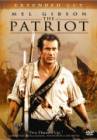
Following on the heels of the May 2000 releases of U-571 and Gladiator, publicity cranked up for the July 4th blockbusters such as The Patriot. Many reviews of The Patriot drew parallels with Braveheart, calling it 'Braveheart with the Stars & Stripes'. Mirroring what had been said in early reviews of Braveheart, The Patriot was criticized as being an hour too long.
There were other criticisms: Mel Gibson's Benjamin Martin was called a retread of William Wallace in Braveheart with Gibson again only out for revenge; Director Roland Emmerich had made an overly melodramatic movie to the point of nausea with his slow-motion flag-waving; the film wrongly portrayed the British like Nazis; only one slave is present in the film while the others are 'employees'.
One review printed in the London Sunday Telegraph written by Jonathan Foreman called the film 'as fascist a film as made in decades', and likened Benjamin Martin to Hermann the German, a German barbarian that had been held up in Nazi propaganda. The article even argued that by portraying the British, in the guise of villain Colonel Tavington, as committing such atrocities as burning down a church with all the town's inhabitants locked inside back in the 1780's, made 1940's Nazi brutality 'look normal'.
The church burning in the movie bears resemblance to the infamous massacre at Oradour sur Glane, France. In 1944, as the Germans were retreating from Allied forces, the Nazi SS shot all the men and boys of the town, and then locked all the women and children in the church and burned it down. Some critics sarcastically suggested that the scene was left over from Saving Private Ryan, screenwriter Robert Rodat's World War II script.
Such a massacre did not happen in the American Revolution, but by scripting a similar event, the British become brutal precursors of the Nazis through the film's revisionist history. This Sunday Telegraph article held Director Roland Emmerich, emphasizing his German heritage, and screenwriter Robert Rodat responsible, while letting Gibson off the hook for being 'only an actor' who naïvely did 'not consider the political or historical implications of such a portrayal of the British'. The article by Mr. Foreman was one of the most vehement examples.
Many other reviews here in America and in England followed the pattern that Quentin Falk used in his review for the London Sunday Mirror. He opened with 'think Braveheart as Mel Gibson swaps the Scots flag for the fledgling Stars and Stripes'. The plot is then described with sarcasm through clichés: 'He's a pacificist [sic] widower…with a dark past…spurned to action…by the slimy Colonel Tavington'. Then in a surprising change of tone, the review ended positively with 'no denying the power of this sprawling adventure … in the finest tradition of big-screen conflicts'. Falk gave the film four out of five stars.
Another review in the London Sunday Mirror by Mariela Frostrup used clichés to undermine the movie. 'Naturally, their idyllic life in a picture perfect Southern plantation house where the slaves are free and there's always apple pie in the oven is brought to an abrupt end.' Before summing up her review, Ms. Frostrup added a postscript about slavery: 'The fact that slavery wasn't completely abolished for another 200 years is a detail which escaped the screenwriters', meaning, according to Ms. Frostrup, that slavery was finally abolished in the early 1980's or the events of the movie took place in the 1680's. She finished her review by giving the movie four out of five stars.
Most reviews here and in England targeted Mel Gibson, rather than Director Roland Emmerich or screenwriter Robert Rodat, for the revisionist history because of his association with Braveheart and greater name recognition. In The Patriot Gibson was simply the star, while Roland Emmerich directed and Dean Devlin produced. The creative team of Devlin and Emmerich was trying to rebound from their big budget, box-office flop from 1998, Godzilla.
Devlin and Emmerich had been behind the science fiction cult success Stargate and box-office success Independence Day. Both movies are considered short on substance and long on melodrama and special effects. Devlin and Emmerich came onboard after reading a draft of the script by Robert Rodat. Devlin and Emmerich decided that they wanted Mel Gibson in the starring role. They went so far as to give the main character a seventh child, when Gibson's wife gave birth to their seventh child. After more than a year of rewrites and pre-production, Gibson agreed to come onboard.